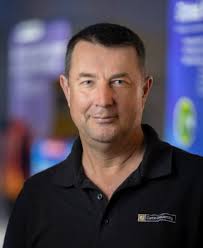
Prof. Igor Bray
John Curtin Distinguished Professor,
Faculty of Science and Engineering
Curtin University, Australia
Igor Bray obtained his PhD in the Department of Mathematical Physics at the University of Adelaide, South Australia, in 1986, entitled “Gravitational Lens effect of Galaxies and Black Holes”. In it he predicted an image of a rotating Black Hole when acting as a gravitational lens.
However, as there was no interest in such ideas at the time, he switched to the field of Atomic and Molecular Collision Theory pursued at Flinders University, also in Adelaide. During this time, he codeveloped the convergent close-coupling theory, which is uniquely valid at all projectile energies and for all collision processes. .
Currently, he is at Curtin University in Perth, Western Australia, where he is the Head of the Department of Physics and Astronomy, and runs the HPC Unit, see https://atom.curtin.edu.au/hpc/. He is a Fellow of the Australian Academy of Science, American Physical Society, and the Institute of Physics. In 2022 he was elected to the Western Australian Science Hall of Fame, and in 2025 was made a Member of the Order of Australia.
He is a Fellow of the Australian Academy of Science, American Physical Society, and the Institute of Physics. In 2022 he was elected to the Western Australian Science Hall of Fame, and in 2025 was made a Member of the Order of Australia.
View Google Scholar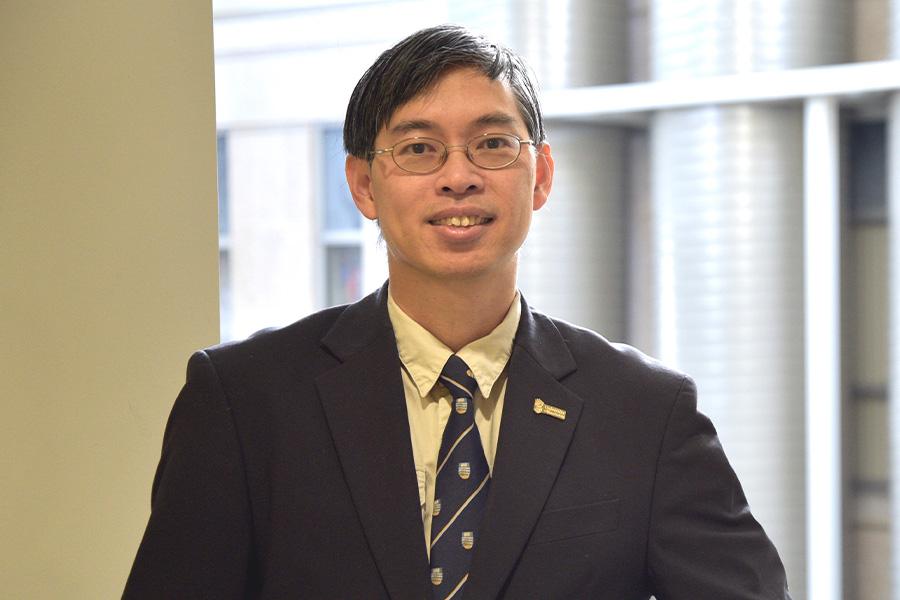
Prof. Carson Kai-Sang Leung
Professor
Department of Computer Science
Faculty of Science,
University of Manitoba
Prof. Carson Kai-Sang Leung s a Professor in the Department of Computer Science at the University of Manitoba, Canada. He received his Ph.D. in Computer Science from the University of British Columbia, Canada. Over the years, he has contributed significantly to the fields of databases, data mining, and data science, and artificial intelligence through both research and teaching.
His research interests span a wide range of areas including web-based database applications, data mining and analytics, recommender systems, healthcare informatic, social network analysis, and the use of technology in education. His work emphasizes practical solutions to real-world problems and has involved the development of several web-based tools and systems, particularly in support of student learning and educational resources..
He has taught a variety of courses at the undergraduate and graduate levels, covering topics such as database systems, data mining, and data science. He has also been actively involved in departmental curriculum development and student mentorship initiatives.
He regularly participates in academic committees and has served as the Editor-in-Chief for Advances in Data Science and Adaptive Analysis (ADSAA) and for Analytics, as well as an Associate Editor for international journals like Springer’s Social Network Analysis and Mining. He has also served on the Organizing Committees of the ACM CIKM, ACM KDD, ACM SIGMOD, DaWaK, IEEE DSAA, IEEE ICDM, and other conferences. He is a Senior Member of both the ACM and the IEEE.
View Google Scholar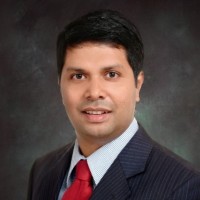
Dr. Himal A. Suraweera
Senior Lecturer
Department of Electrical and Electronic Engineering
Faculty of Engineering,
University of Peradeniya
Dr. Himal A. Suraweera is a Senior Lecturer at the Department of Electrical & Electronics Engineering at the University of Peradeniya, Sri Lanka. Between January 2011 and May 2013, he was a Post-Doctoral Research Associate at the Singapore University of Technology and Design, Singapore. Between July 2009 and January 2011, he worked at the Department of Electrical and Computer Engineering, National University of Singapore as a Research Fellow. Prior to that, he worked at Victoria University, Melbourne, Australia as a research fellow.
His research interests are in wireless communications and communication theory, particularly relay networks, energy harvesting and green communications, full-duplex systems, physical layer security, cognitive radio, and MIMO systems. Dr. Suraweera received the IEEE ComSoc Asia-Pacific Outstanding Young Researcher Award in 2011 and currently serves on the editorial board of IEEE Communications Letters.
He has served as a Technical Program Committee member for conferences including IEEE ICC, GLOBECOM, WCNC, VTC, and PIMRC. He has also been recognized with IEEE exemplary reviewer certificates and is a member of the IEEE.
View Google Scholar